
According to the DataEye Institute, in the first half of 2025, the Japanese shortshow market generated more than $70 million and was the second most stable in the global overseas shortshow after the United States. As the micro-blind storm hit the world, the traditional media giants of Japan began to enter, and the market for Japanese micro-blinds was at a critical point in its development.

In its White Paper on Shorts Out of the Sea 2025, the global technology giant Meta predicted that Japan’s micro-surge market would reach $480 million in 2025, an increase of 85 per cent over the same period, representing 15 per cent of the global shortshow market share. This growth rate is well above the global average, highlighting the enormous potential of Japan as a short-time consumer market. In contrast, the South-East Asian market ranked third in terms of income of $6.9 million, while the European market showed a slight lag.
The rapid rise of the Japanese short play market has benefited from its mature payment environment and high-user viscosity. In the first quarter of 2025, global short-time applications generated $3.3 billion, and the number of downloads surged to 259 million, an increase of 64 per cent over the previous year. The user-paying habits of the Japanese market are particularly prominent, especially among female user groups, where the short drama of romance and revenge dominates. The success of a single short play, The Great Rich, Sun-sama, demonstrated the high degree of acceptance by Japanese users of high-quality, fast-paced, curvatured short play content, with a single achievement worth over $5 million, and a new market record.

According to a Japanese entertainment and media market study, the proliferation of universal power-driven media services and mobile applications on smartphones and high-speed Internets has attracted young groups eager to entertain on demand. As audiences shift to new digital platforms, traditional media are under pressure, and businesses are innovative and changing their content distribution strategies. The main market drivers include the emergence of subscription-based consumption patterns, which offer clients more options that are in line with their interests.
The Japanese entertainment media market is undergoing a major digital transformation, particularly with the rise of streaming media services. The Ministry of General Services of Japan reported that, in recent years, the entertainment of ordinary families in digital stream media services had indicated that they accounted for more than 20 per cent of their total expenditure. As service providers adapt to changing consumer tastes, this trend is expected to drive further expansion of the entertainment media market in Japan, with an expected annual growth rate of over 9 per cent.
Meta noted that Japanese users were much more receptive to subscriptions, in-sale and fee-free content than many other markets. Similar to the Chinese short play market, Japanese users are willing to pay for high-quality content, in particular a quick-paced mini-theater series of 1-3 minutes, a consumption model that is “immediately satisfied” that fits well with mobile entertainment needs.

The short play quickly captures the Japanese audience with its low-cost, fast rhythm and high emotional density. Short shorts are more suited to the fragmented viewing habits of smartphone users than traditional long television or film. Data from DataEye shows that, in the first quarter of 2025, the number of advertising ideas for short play applications worldwide reached 1.27 million, equivalent to 70 per cent of the total in 2024, reflecting an explosion in content production and marketing. The Japanese market is particularly interested in localized content, such as romantic, skeptical and phantoms that integrate elements of Japanese culture, which further promotes market penetration.
The Japanese entertainment media market, which covers video games, animation, television, film and digital media, is one of the most dynamic and competitive industries in the world. Japan ‘ s unique cultural environment has had a profound impact on consumer tastes and has exacerbated intense competition between indigenous and global enterprises.
Melolo, the byte-jumping micro-shorts platform under the banner of the South-East Asian market, although flat, has gradually stabilized in Japan through precision localization strategies and high-quality content outputs. On the other hand, the Chinese online group, with its wealth of short play content and translation skills, has succeeded in attracting Japanese viewers by adapting the Chinese popular short play into Japanese. In addition, overseas short play applications such as ReelShort and DramaBox, despite challenges to speed and depth of localization of content, are still visible on the Japanese market.
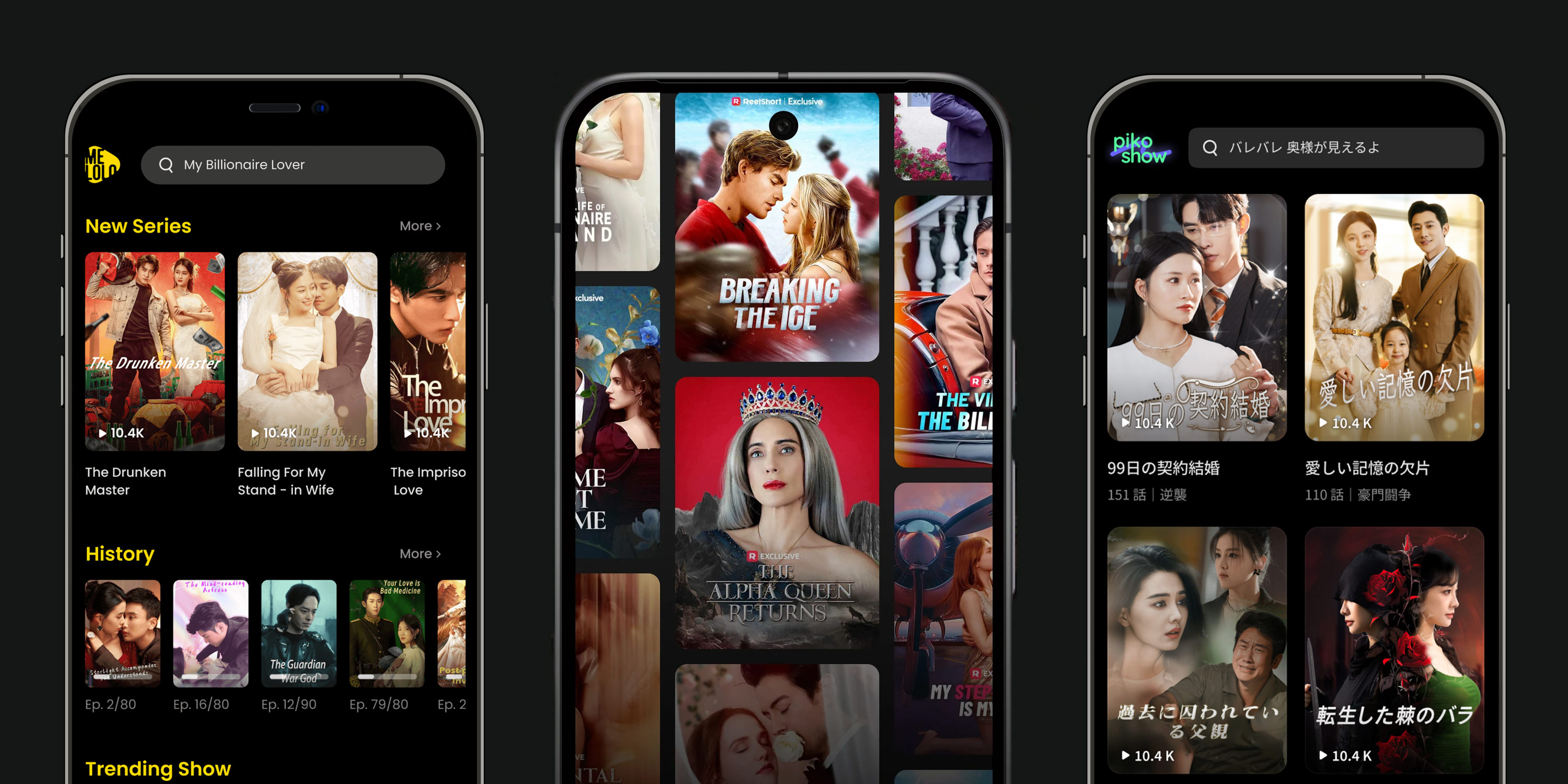
The collective downfall of Japan ‘ s five major private television stations (JTTV, TBS, Fuji TV, Asaiyang and Tokyo TV) has been an attempt by these traditional media giants, with their strong content production capacity and brand influence, to start investing in short-time production and distribution platforms to breathe new life into the market while also trying to share a piece in the field of intense digital entertainment.
The rapid rise of the Japanese short play market not only reflected the release of its domestic consumption potential, but also marked its rise in the global entertainment industry. The projected market size of $480 million and the global share of 15 per cent throughout 2025 have made Japan an important strategic market for short-lived trips to the sea. Combined with the global impact of the Japanese animation, music and games industry, the short play is expected to further magnify the effects of Japanese cultural output.